
Opens in a new tab

Joshua Holbrook

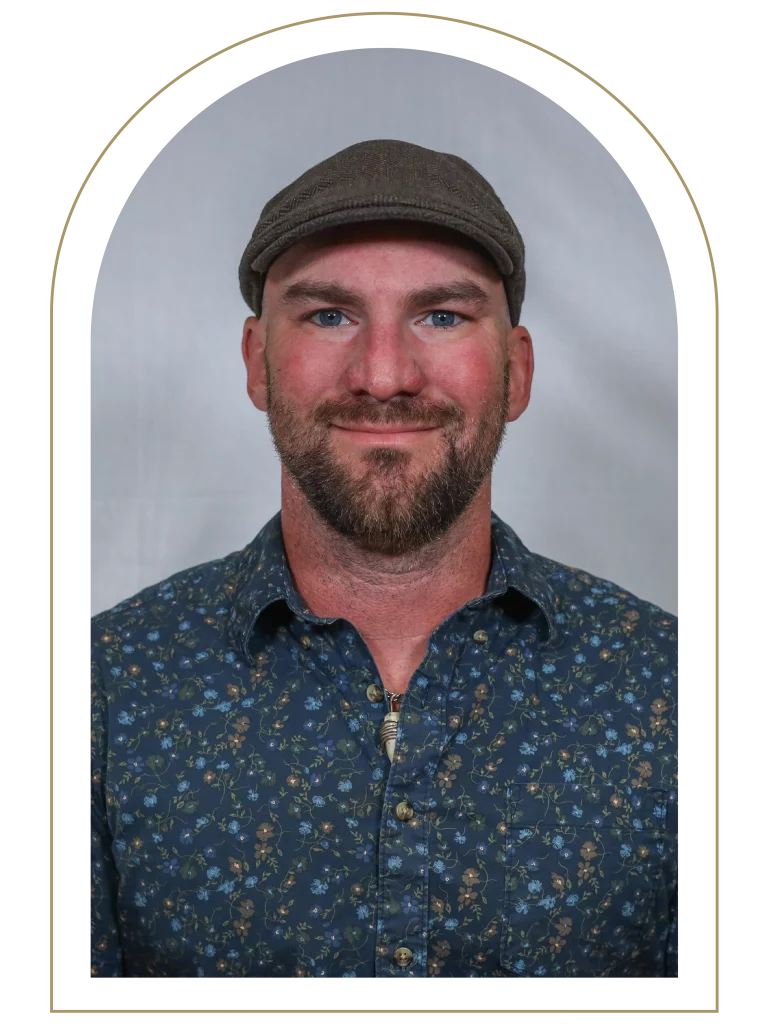
Photo of Josh Holbrook
Associate Professor of Environmental Science

Studies in Natural and Health Sciences
Faculty of Science and Human Services

Dr. Joshua Holbrook joined the Montreat College faculty in 2017. Prior to coming to Montreat he taught students at the Palm Beach Zoo and Asheville-Buncombe Technical Community College. Dr. Holbrook has also had the opportunity to educate much broader audiences, appearing as a guest on reptile-related programs with the Weather Channel, the History Channel, the Discovery Channel and NatGeo—many of these programs are facilitated by Josh’s pioneering work with the exotic Burmese Pythons and chameleons in southern Florida.

Dr. Holbrook earned his B.S. in Biology from Palm Beach Atlantic University, his M.S. in Environmental Science from Florida Atlantic University (FAU), and his PhD in Wildlife and Fisheries Biology from Clemson University. His primary areas of academic interest are wetland community ecology and herpetology, and his research experience has brought him to collaborations with entities as varied as the National Park Service, The US Fish and Wildlife Service, the North Carolina and Florida Park Service, the North Carolina Wildlife Resource Commission and number of academic institutions. Dr. Holbrook is the Director of Undergraduate Research at Montreat and manages the HERP Lab, a research group of undergraduate STEM Scholars conducting original undergraduate research in North Carolina and throughout the southeast. 

One of Dr. Holbrook’s passions is to learn new things and to share them with others, and he loves educating at a place where “mere” teaching can become discipleship and students can learn how achieve excellence as both scientists and followers of Christ—to remember that, in all we do “it is the Lord Christ whom you serve” (Col. 3:24). To that end, he always seeks to get students involved in ‘the real stuff’ of environmental science and biology, learning both field research skills and the things that make it possible—and meaningful—to others. For a Christian, all of Environmental Science comes down to the stewardship of creation and awe of its Creator.

Dr. Holbrook and his wife, Beka, have three children, Chava, Josephine, and Jonah; and they enjoy spending time together hiking and looking for salamanders and bugs. Before coming to Montreat, the members of the Holbrook family were missionaries serving at the home campus for Equip International, teaching sustainable agriculture and missionary medicine.

What is your favorite thing about working at Montreat?
I love the students’ passion for getting outdoors, observing the natural world, sitting around campfires, and talking about life.

What are your hobbies or interests?
Herping, gardening, spending time with my family, guitar, hiking

What is your favorite thing to do or see in the area?
A big, chunky Timber Rattlesnake crossing a gravel road

Degrees

B.S., Palm Beach Atlantic University
M.S., Florida Atlantic University
PhD, Wildlife and Fisheries Biology, Clemson University

Bibliography

Pingleton, Mike, and Joshua Holbrook. The Field Herping Guide: Finding Amphibians and Reptiles in the Wild. Athens, GA: The University of Georgia Press, 2019.

Holbrook, J.D. and K. Barrett. 2025. Amphibian assemblages in isolated wetlands are predicted by interannual variation in fish occupancy: A case study from Florida, USA. Herpetological Conservation and Biology 20(3):514-623. 

Holbrook, J. D. and M. Pingleton. 2018. The Field Herping Guide: Manifesto to the Next Generation of Field Herpers. Proceedings of the International Herpetological Symposium.

Holbrook, J. D. and N. Dorn. 2015. Fish reduce anuran abundance and decrease herpetofaunal species richness in wetlands. Freshwater Biology. (Citations: 22)

Holbrook, J. D. and T. Chesnes. 2011. An effect of Burmese pythons (Python molurus bivittatus) on mammal populations in southern Florida. Florida Scientist 74(1):17-24. (Citations: 31)

Holbrook, J. D. and K. Krysko. 2011.The Tentacled Snake, Erpeton tentaculatum Lacepede 1800 (Homalopsidae), in Florida. IRCF Reptiles & Amphibians 18(1):52.

Holbrook, J. D. 2012. Anolis sagrei (Brown Anole). Prey. Herpetological Review 43(4): 641.

Holbrook, J. D., J. Young, B. Bartek and M. Dolinsky. 2012. Geographic Distribution: Pseudobranchus axanthus belli (Everglades Dwarf Siren). Herpetological Review. Holbrook, J. D. 2013. Nerodia taxispilota (Brown Watersnake). Diet. Herpetological Review 44(2): 333.  

Holbrook, J. D. C. A. Young, D. P. Young, Jr. and N. Greenwald. 2013. Nerodia floridana (Florida Green Watersnake). Diet. Herpetological Review 44(3):525.

Vogrinc, P., J. D. Willson, A. M. Durso, L. A. Bryan, Z. Ross, J. Holbrook and D. Filipiak. 2013. Nerodia floridana (Florida Green Watersnake). Diet. Herpetological Review 44(4):695.

Boss, H., T. Chesnes and J. D. Holbrook. 2014. Siren lacertina (Greater Siren). Habitat. Herpetological Review 45(2):302. 

Holbrook, J. D., A. Berman and A. Romnosky. 2014 Notophthalmus viridescens piaropicola (Peninsula Newt). Geographic Distribution. Herpetological Review 45(2):275.

Holbrook, J. D., N. J. Dorn, N. E. Knorp and A. D. Chapman. 2014. Pseudobranchus axanthus belli (Everglades Dwarf Siren). Geographic Distribution. Herpetological Review 45(2):275.

Holbrook, J. D. T. Chesnes, H. Boss, A. Berman, F. Chiyka, C. Bell and C. Bell. 2016. Nerodia clarkii compressicauda (Mangrove Saltmarsh Snake). Geographic Distribution. Herpetological Review 47(1): 84.